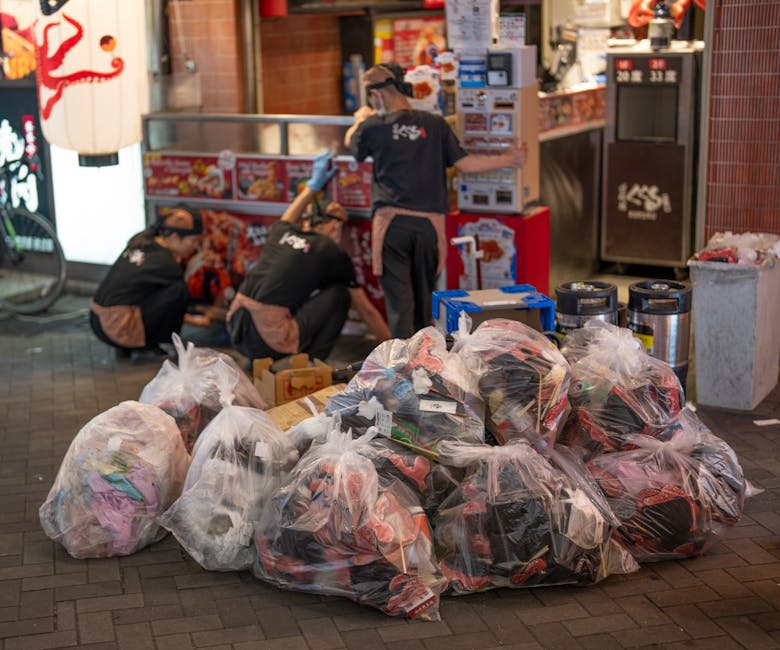
Fleet Street same day rubbish clearance for businesses in Temple
If you run a business near Fleet Street, you already know how quickly rubbish can get in the way. One overflowing stockroom, one post-refurbishment pile-up, or one back-office clear-out can make the whole place feel cramped and distracted. That is where Fleet Street same day rubbish clearance for businesses in Temple makes a real difference: fast removal, minimal disruption, and a cleaner space before the day gets away from you.
This guide explains how same day commercial rubbish clearance works in practice, who it suits, what to prepare, and the mistakes that cause unnecessary delays. You will also find a simple checklist, a comparison table, and a few practical pointers that can save you time and stress. Truth be told, when rubbish starts taking over a workspace, the whole mood changes. Nobody needs that.
Contents
- Why Fleet Street same day rubbish clearance for businesses in Temple Matters
- How Fleet Street same day rubbish clearance for businesses in Temple Works
- Key Benefits and Practical Advantages
- Who This Is For and When It Makes Sense
- Step-by-Step Guidance
- Expert Tips for Better Results
- Common Mistakes to Avoid
- Tools, Resources and Recommendations
- Law, Compliance, Standards, or Best Practice
- Options, Methods, or Comparison Table
- Case Study or Real-World Example
- Practical Checklist
- Conclusion
- Frequently Asked Questions
Why Fleet Street same day rubbish clearance for businesses in Temple Matters
In a busy part of central London, rubbish is not just an inconvenience. It can affect customer experience, staff safety, stock handling, fire routes, and how professional your business looks from the outside. Around Fleet Street and Temple, space is often tight, loading windows can be limited, and a small mess can feel much bigger than it would elsewhere.
Same day clearance matters because business waste tends to build up at the worst possible time. A cafe may suddenly need a stripped-back kitchen corner cleared. A solicitor's office may have archive boxes, old chairs, and broken equipment blocking a room that needs to be used that afternoon. A contractor may finish a fit-out and need the debris gone before the next team arrives at 8am. You get the idea.
Speed is part of the value, but so is control. With a fast, planned clearance, you reduce disruption and get back to work with less fuss. That matters whether you are managing an office, retail unit, hospitality site, or a mixed-use premises near Temple.
Expert summary: same day commercial rubbish clearance is at its best when time, access, and presentation all matter at once. If you need the space cleared before staff return, clients arrive, or contractors start work, it is often the simplest way to keep the day on track.
How Fleet Street same day rubbish clearance for businesses in Temple Works
The process is usually straightforward, but a little preparation helps it move smoothly. A good clearance team will want to know what needs removing, where it is located, whether anything is awkward to move, and whether the waste includes anything that needs special handling.
For many businesses, the work starts with a quick phone call or booking enquiry. You describe the rubbish, share access details, and agree a collection time. If the load is clear and the access is simple, the team can often turn up the same day, assess the waste, and remove it there and then.
In practical terms, a same day clearance often looks like this:
- You explain what needs to go, including bulk items, loose waste, or mixed rubbish.
- The team confirms whether same day attendance is possible and what access they will need.
- They arrive within the agreed window and assess the job on site.
- If needed, they provide a price based on the volume, weight, and type of waste.
- The rubbish is removed, loaded, and taken away for sorting and disposal.
- You are left with a clearer space and less admin to deal with later.
Some jobs are quick. Others take a bit more thought, especially where there are narrow stairwells, lift restrictions, loading bay rules, or a mixture of general waste and specialist items. Around Temple, those details matter more than people expect. One missed access note can waste half an hour, and in London half an hour can feel like a very expensive luxury.
If your rubbish includes confidential paper or sensitive materials, it is worth speaking to the team about confidential shredding before the collection day. If the waste is from a refit or light demolition, the right fit may be builders waste clearance rather than a general office clearance. Matching the job to the right service helps avoid delays and misunderstandings.
Key Benefits and Practical Advantages
The biggest benefit is obvious: your rubbish disappears quickly. But the real value goes deeper than that. Businesses near Fleet Street often need more than a van and a loading team. They need timing, discretion, and a service that does not cause a scene in the middle of the working day.
- Minimal downtime: the space is cleared before it starts affecting operations.
- Cleaner presentation: important if clients, customers, or auditors are visiting.
- Better use of space: storage rooms, back offices, and corridors become usable again.
- Less staff distraction: people can focus on work instead of stepping around rubbish.
- Improved safety: fewer trip hazards, blocked exits, or unstable piles.
- More flexible scheduling: same day support helps during urgent situations.
There is also a quieter benefit people sometimes overlook: decision relief. Once the rubbish is removed, you do not keep rethinking it. No more "we'll deal with that tomorrow" every time you walk past the pile. That mental reset is real, especially in busy offices where everyone already has enough on their plate.
For many businesses, this type of clearance also supports a more organised waste strategy. If you want to improve ongoing waste handling after the urgent job is done, a broader approach through business waste removal can help keep future build-up under control. And if sustainability matters to your team, it is worth looking at recycling and sustainability so you know how reusable and recyclable material is typically handled.
Who This Is For and When It Makes Sense
This service suits a wide mix of businesses, not just offices. In central London, waste problems are rarely tidy or predictable. One day it is packaging and broken shelving. The next day it is an entire meeting room of old furniture. Same day clearance is useful whenever the rubbish is stopping work, creating a hazard, or making the premises look untidy at the wrong time.
It often makes sense for:
- offices clearing old desks, chairs, filing, or technology
- retail units removing stockroom clutter, damaged displays, or packaging
- hospitality venues clearing kitchen waste, broken appliances, or surplus fixtures
- landlords and property managers dealing with commercial end-of-tenancy waste
- contractors finishing light refurbishment or strip-out work
- professional firms needing sensitive material removed quickly and discreetly
It is especially sensible when you are working to a deadline. Perhaps a lease handback is due. Perhaps you need to open a room for a client meeting by late afternoon. Or maybe you have just had a storage cupboard collapse on itself because nobody had time to sort it out. Been there, seen that. It never looks as bad until you start lifting the first box.
Same day rubbish clearance also suits businesses that cannot easily store waste overnight. In Temple, where access and space are often tight, leaving rubbish out "for later" can create more problems than it solves.
Step-by-Step Guidance
If you want the process to run smoothly, a little preparation goes a long way. Here is a simple way to approach it.
- Identify the waste clearly. Separate general rubbish from items that may need special handling, such as fridges, confidential paperwork, or anything damaged by chemicals.
- Check access. Note whether the team will need stairs, lifts, fobs, parking access, or a loading bay arrangement.
- Estimate the volume. A rough idea of how much rubbish there is helps the provider prepare properly. A few bags is very different from a van load of bulky furniture.
- Remove anything you want to keep. It sounds obvious, but in a rush it is easy to leave a box in the wrong corner. That happens a lot.
- Ask about special items. For example, appliances may need specific handling, and some items are better dealt with through fridge and appliance removal.
- Confirm timing and contact details. Same day jobs move fastest when the team can reach the right person quickly.
- Prepare the area. Make the waste accessible if possible. Even a small amount of sorting can reduce time on site.
A useful habit is to walk the space once before you book. Look at the rubbish as if you are seeing it for the first time. What is loose? What is heavy? What is awkward? That quick scan usually reveals at least one thing you would otherwise forget.
If the clearance is part of a larger office tidy-up, you may also want to review office clearance so the collection is aligned with the wider job. And if there are old sofas, waiting-room chairs, or reception furniture mixed in, mattress and sofa disposal or furniture disposal may be more relevant than a general clearance route.
Expert Tips for Better Results
Most delays are avoidable. The businesses that get the smoothest same day clearance tend to do a few simple things well.
- Be specific from the start. "Office waste" is vague. "Six desks, ten chairs, two filing cabinets, and eight sacks of mixed rubbish" is much more useful.
- Flag awkward access early. Narrow stairs, basement rooms, and security checks can affect the schedule.
- Keep a clear route. If waste is hidden behind stock or furniture, moving it beforehand can save time.
- Separate sensitive or hazardous items. Do not mix them into general rubbish unless you know they are accepted.
- Match the service to the material. Builders' debris, office furniture, and appliance waste are not always best handled the same way.
One of the best practical tips is to group rubbish by type before the team arrives. Not perfectly, just sensibly. Cardboard with cardboard. Furniture with furniture. Bagged waste together. That can make a same day job feel much less chaotic on the day.
And if you are in a building with strict safety procedures, keep them simple and visible. A quick note on where to sign in, where to park, and which entrance to use can make the whole thing far less fiddly. Less faff, basically.
Common Mistakes to Avoid
Same day rubbish clearance is fast, but speed does not forgive sloppy planning. The most common mistakes are usually small ones that snowball.
- Assuming every item is standard waste. Some items need specialist handling or are not suitable for a normal collection.
- Leaving the waste in multiple rooms. Scattered rubbish takes longer to collect and assess.
- Forgetting about access restrictions. Parking, lifts, security, and time windows matter.
- Mixing confidential documents with mixed waste. That is a risk nobody wants.
- Booking too late in the day. Same day availability can be limited, especially when central London traffic is not feeling generous.
- Choosing only on price. Cheap is not always efficient if the provider is not prepared for the job.
Another mistake is underestimating the cleanup after the rubbish is removed. Sometimes the waste is only half the issue. Dust, broken fixings, and leftover fragments can still make the room unusable. If that is the case, ask how the clearance will be handled and what remains for you to tidy up afterwards.
There is also the classic mistake of not checking what is included in the quote. In a busy area like Temple, access and labour can make a noticeable difference. Clarity up front saves awkward conversations later. No one wants those.
Tools, Resources and Recommendations
You do not need fancy tools to organise a decent clearance, but a few basic items help.
- Room-by-room note: jot down what is going from each area.
- Phone photos: useful for helping the clearance team understand volume and access.
- Simple labelling: "keep", "clear", and "unsure" is often enough.
- Access instructions: a short written note can prevent confusion at arrival.
- Waste separation plan: especially helpful if you have mixed bulky items and bagged waste.
For businesses that generate ongoing waste rather than one-off clearances, it is worth checking waste removal options as part of your longer-term routine. If you need to understand disposal boundaries for mixed loads, what can go in a skip is a useful reference point for planning and sorting, even if you are not using a skip on the day.
If you want to review pricing, it can also help to look at pricing and quotes before you book. Transparent pricing is especially helpful when the job is urgent and you do not have time for guesswork.
Law, Compliance, Standards, or Best Practice
Commercial rubbish clearance is not just about getting things out of the way. Businesses still need to think carefully about duty of care, safe handling, and proper disposal. UK waste rules can be straightforward in principle, but in practice the details matter.
At a minimum, businesses should make sure waste is transferred to a legitimate carrier and handled appropriately for its type. That is especially important for mixed commercial waste, electrical items, confidential material, and anything that could be classed as hazardous. If you are unsure whether an item is hazardous, treat it cautiously and ask before collection. Better that than a problem later.
Best practice also includes:
- separating reusable, recyclable, and general waste where practical
- keeping hazardous items out of ordinary mixed loads
- protecting personal data and sensitive paperwork
- using proper handling for heavy or awkward items
- making sure staff understand what is being removed before collection begins
If your clearance involves items that may be unsafe or regulated, hazardous waste disposal should be discussed separately. For workplace safety and reassurance, it is sensible to review health and safety policy and insurance and safety information before booking. That is not paperwork for paperwork's sake; it helps you avoid awkward gaps in responsibility.
If you are clearing business records, old files, or client-sensitive material, confidential shredding is the safer route than just "putting it in a bag and hoping". To be fair, hoping is not a waste strategy.
Options, Methods, or Comparison Table
Businesses usually have a few ways to deal with rubbish. The right choice depends on volume, urgency, access, and the type of waste involved.
| Method | Best for | Advantages | Limitations |
|---|---|---|---|
| Same day rubbish clearance | Urgent commercial waste, bulky items, mixed loads, fast turnaround | Quick, convenient, minimal disruption, often handled from one visit | Availability can be limited; access details need to be accurate |
| Scheduled business waste collection | Ongoing waste generation | Predictable, easier for routine operations | Not ideal when rubbish has already built up |
| Skip hire | Longer projects, refurbishment, recurring building waste | Good for continuous loading over time | Space, permits, and placement can be a challenge in central areas |
| Specialist item removal | Appliances, furniture, confidential items, or hazardous waste | More suitable for specific waste types | May need separate planning or a tailored service |
For many businesses in Temple, same day clearance is the best option when the issue is immediate. Skip hire can make sense for larger projects, but in tight central streets the logistics can be awkward. That is why a direct clearance service is often easier when time is the main pressure.
Case Study or Real-World Example
Picture a small professional office near Fleet Street on a Thursday morning. The team has just finished replacing old desk units, two meeting room chairs are broken, and a pile of boxes from archived files is sitting in the corridor. The office still has clients visiting that afternoon. Not ideal.
Rather than trying to move everything in stages, the manager arranges same day clearance. Before the team arrives, staff place the broken furniture in one area and separate the paper-heavy boxes from the rest of the waste. That small bit of prep matters. The collection is then quicker, the corridor is cleared, and the office can still host visitors later in the day without the place smelling faintly of dust and cardboard. You know the smell. Everyone knows the smell.
The key lesson is simple: the cleaner the brief, the smoother the clearance. The business did not need a perfect system. It just needed a workable one, and a fast response. That is usually enough.
Practical Checklist
Use this before booking Fleet Street same day rubbish clearance for businesses in Temple.
- Identify exactly what needs removing
- Separate general waste from specialist items
- Check access, lift use, and any parking restrictions
- Estimate the number of bags, boxes, or bulky items
- Remove anything you want to keep
- Flag confidential or sensitive material in advance
- Ask whether any items need separate handling
- Confirm the collection time and the contact person on site
- Review pricing and what is included
- Make the waste as accessible as possible before arrival
If you can tick most of those off, the job usually goes much more smoothly. Not glamorous, but effective. And in rubbish clearance, effective is what pays the bills.
Get a free quote today and see how much you can save.
Conclusion
Fleet Street same day rubbish clearance for businesses in Temple is about more than speed. It is about keeping a commercial space usable, safe, and presentable when time is tight and disruption is not an option. Whether you are clearing office clutter, furniture, mixed waste, or something more specialised, a well-planned same day service can take a lot off your shoulders in one go.
The best results come from clear information, sensible preparation, and choosing the right service for the type of waste you have. If you do that, the whole process becomes much simpler than most people expect. And once the rubbish is gone, the room tends to feel bigger too. Funny how that works.
For businesses in Temple, that fresh start can be a practical win and a small bit of relief on a busy day. Sometimes that is exactly what the week needs.
Frequently Asked Questions
How fast can same day rubbish clearance happen for a business in Temple?
In many cases, it can happen on the same day if the team has availability and the waste details are clear. Timing depends on access, waste type, and how busy the schedule is when you book.
What types of business waste can usually be cleared the same day?
Common examples include office rubbish, bulky furniture, packaging, shelving, general mixed waste, and some refurbishment debris. Items that need specialist handling should always be disclosed first.
Is same day clearance suitable for offices near Fleet Street?
Yes, especially if the office needs to stay open, keep clients happy, or prepare a room quickly. Central London offices often benefit from fast turnaround because space is limited and access windows can be tight.
Do I need to sort the rubbish before the team arrives?
You do not need to sort it perfectly, but grouping similar items together helps. At the very least, separate anything confidential, hazardous, or particularly awkward so it can be handled properly.
What if the waste includes old furniture or appliances?
That is usually manageable, but it helps to mention it early. Furniture and appliances may require different handling, and some items are better matched to dedicated services such as furniture disposal or appliance removal.
Can you clear confidential documents as part of the job?
Yes, but they should be flagged before collection. Confidential material should not be treated like ordinary waste. Ask about secure handling and shredding rather than mixing it into general rubbish.
How do I know if something counts as hazardous waste?
If an item contains chemicals, sharp residues, unusual liquids, or anything that could pose a risk to people or the environment, treat it as potentially hazardous. When in doubt, ask before the collection is booked.
What affects the price of same day rubbish clearance?
Volume, weight, waste type, access difficulty, and urgency can all affect the price. A clear description and a few photos usually help keep the quote realistic and reduce surprises.
Is same day clearance better than skip hire for business rubbish?
Not always, but it often is when speed and access matter more than storage time. Skip hire can suit longer projects, while same day clearance is usually better for immediate removal and limited space.
How should I prepare a central London business site for collection?
Make sure the waste is accessible, confirm entry details, check parking or loading arrangements, and tell staff what is being removed. A few minutes of preparation can save a lot of wandering around later.
What happens to the waste after collection?
It is typically sorted for reuse, recycling, or disposal depending on the material. The exact route depends on the type of waste collected and what can be recovered safely and appropriately.
Where can I find more information before I book?
You can review the business waste removal service, pricing, recycling approach, and book online pages to understand the process better before making a decision. That usually gives a good picture of what to expect.